5 Reasons We May Be Fighting Misinformation the Wrong Way
What if the misinformation crisis tells us as much about how institutions communicate as it does about what people believe?
A few years ago, while supporting COVID-19, polio and Ebola responses in Sierra Leone, we built ourselves a rather fine misinformation monitoring system. We adapted existing digital marketing tools into a dashboard that could track rumours, detect misleading narratives and compare them with vaccination performance. Whenever vaccination rates dropped, we investigated whether misinformation was to blame.
It was sophisticated, data-driven and genuinely useful. But there was one thing we weren’t particularly good at: questioning good news.
One day, COVID-19 vaccinations around Freetown began rising sharply. Within two weeks, the numbers looked splendid. Our digital campaigns had just begun. Perhaps they were already working! Public confidence was returning! We might even have deserved some credit.
So, at a coordination meeting, we congratulated ourselves. Until somebody casually observed: “So many young women…”
An inconvenient remark. The sort that ruins a perfectly good celebration.
Back at the office, I opened our dashboard. Indeed, young women accounted for a disproportionate share of the increase. I examined the online conversations. Two keywords stood out: contraception and fertility.
Then came the missing piece, from community reports collected through an entirely separate mechanism. In several neighbourhoods, young women reportedly believed COVID-19 vaccines could prevent pregnancy. Some were even seeking multiple doses within the same month. The belief was false—COVID-19 vaccines are not contraceptives—but community reports suggested it was influencing some vaccination decisions.
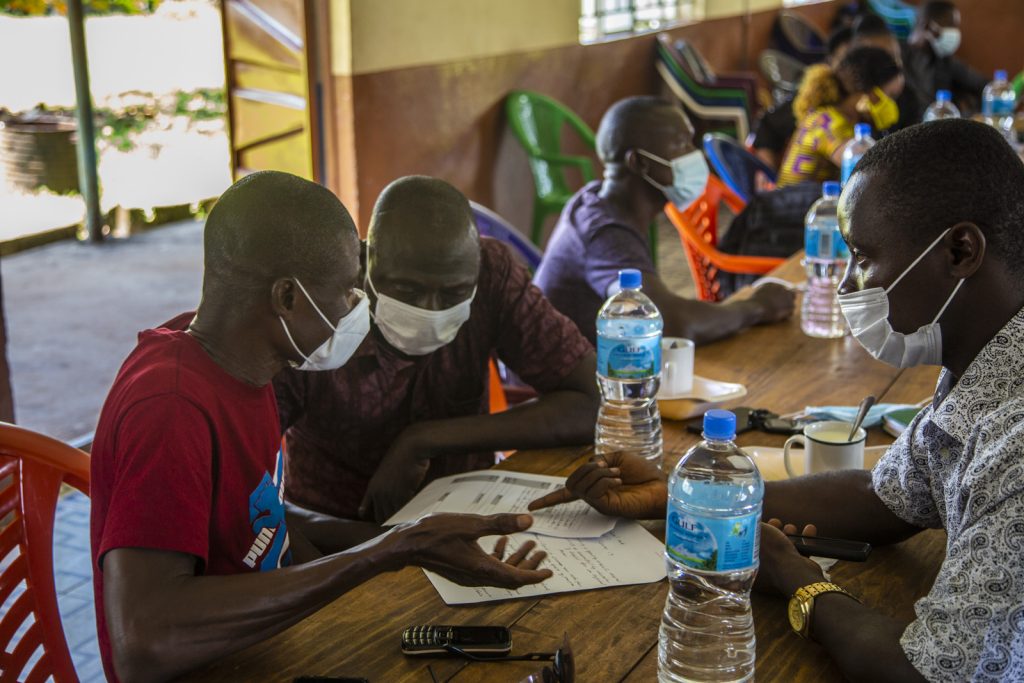
The very misinformation we had been hunting as an obstacle to vaccination was potentially encouraging it.
Our indicators were improving beautifully. Our understanding of why was not.
We had built an excellent system for investigating why vaccination numbers went down. It had never occurred to us to investigate why they went up. And the information was already there, scattered across our digital monitoring, community reports and immunization data. Like many respectable institutions, our data had learned to work in separate departments.
The discovery prompted us to integrate online and offline monitoring into a real-time analytical system and strengthen checks against inappropriate repeat vaccination. But it taught me something more enduring.
We had become remarkably good at finding the problems we expected. The unexpected ones had to come knocking on the door.
And that, I suspect, is a fairly common institutional disease.
The World Economic Forum ranks misinformation and disinformation as the second most severe global risk over the next two years. The United Nations has made information integrity a global priority. And rightly so.
1. We spend so much time correcting misinformation that we forget to ask why anyone believed it
There is a peculiar institutional habit: when someone asks a question we have already answered, we assume the problem is with the person asking it. Perhaps they didn’t read the brochure. Perhaps the message didn’t reach them. The solution, naturally, is another brochure.
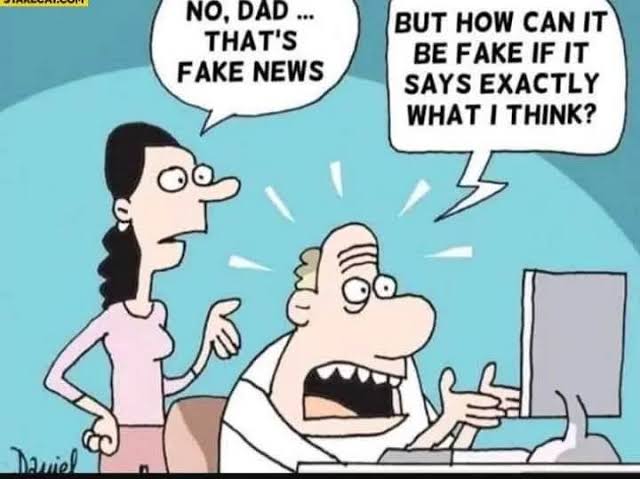
But misinformation frequently exploits something more fundamental: an information gap.
Researchers Michael Golebiewski and danah boyd described these vulnerabilities as data voids: gaps in search information that can be exploited by actors seeking to influence what others discover and believe.
A related dynamic appears during public-health emergencies, when uncertainty can develop faster than reliable explanations reach everyone.
Take the recent Ebola cases in Kenya. When the first imported case was announced in October 2026, our preliminary digital analysis captured 8,714 online mentions during the first week.
There were unsupported claims that the disease had been fabricated or deliberately introduced. But alongside them were perfectly reasonable questions. How had an infected traveller passed through airport screening? What about the passengers? How was quarantine being organised? Why was the government reporting an Ebola case while saying Kenya was not experiencing an outbreak?
These were not necessarily conspiracy theories. Many were legitimate requests for explanations about how the response worked. And the distinction matters.
The available epidemiological information pointed to a monitored transmission chain, rather than evidence of uncontrolled community spread. Yet that did not automatically explain to the public how screening, contact tracing or imported-case classifications worked.
Our analysis suggested that these information gaps provided opportunities for misleading interpretations. A question about airport screening could become an accusation of concealment. A question about emergency funding could become an allegation that the outbreak was invented for profit.
The analysis did not establish that unanswered questions caused those allegations. But it revealed how legitimate uncertainty and unsupported narratives could coexist—and potentially reinforce one another.
The gap between a legitimate question and an invented explanation can be remarkably small when nobody offers a convincing answer.
Some disinformation is deliberately manufactured regardless of available evidence. But correcting a falsehood without answering the question beneath it may leave the same vulnerability intact.
Misinformation does not always prevail because it offers a better explanation. Sometimes it prevails because it offers the only explanation people can find.
And so, when misinformation appears, perhaps we should ask not only who started it? But also: where were we when people needed an answer?
2. We still believe authority travels with the letterhead
For much of the last century, institutional communication followed a comfortable arrangement. Experts produced knowledge. Institutions approved it. Newspapers and broadcasters distributed it. The public received it.
Then the internet arrived and rearranged the furniture without asking permission.
Suddenly, an epidemiologist’s explanation appeared beside a grandmother’s experience, a community health worker’s advice, a YouTube creator’s interpretation and a stranger’s remarkably confident opinion. The experts were still experts. But expertise was no longer the only thing people considered when deciding whom to believe.
Pew Research found that 37% of Americans aged 18–29 regularly received news from social media influencers in 2024. Among young adults using these sources, 72% said they helped them understand current events and civic issues.
A 2026 systematic review of 25 studies found that health experts enjoyed only a small persuasive advantage over non-experts on social media.
An uncomfortable finding for those of us who assumed that placing an institutional logo above a statement should settle the matter.
But perhaps the public has not abandoned expertise. Perhaps it has changed its expectations of what knowledge should look like.
On social media, people question explanations, compare experiences, challenge assumptions and participate in conversations. Knowledge is no longer merely delivered. It is discussed, interpreted and shared.
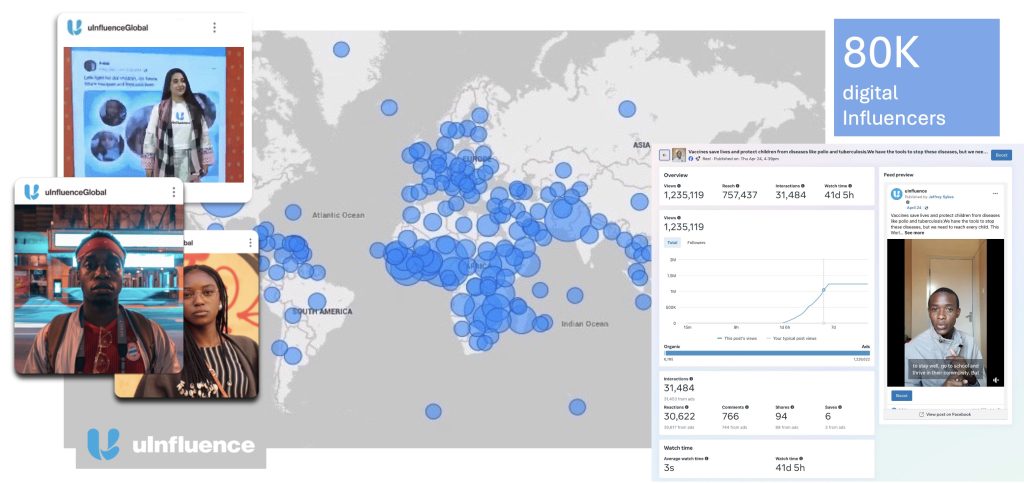
We’ve observed something interesting through UNICEF’s Digital Community Engagement work. With uInfluence, we engage local micro-influencers—often young people and caregivers with modest followings but established relationships within their communities.
They receive reliable information and insights about emerging questions, then engage through their own language, channels and networks.
In our programme experience, similar health information has sometimes attracted less negative feedback and more constructive discussion when shared through these community relationships than through conventional institutional or partner channels.
This is an operational observation, not a controlled comparison demonstrating that micro-influencers are universally more effective. Audience characteristics, presentation and platform dynamics may also explain the differences.
Still, the observation raises an important question. What makes information credible?
It isn’t simply that a different person repeats our message. Community members can interpret it, challenge it and place it within familiar experiences. A small local network may possess something that even the grandest institutional account struggles to acquire: trust that existed before the message arrived.
Personal experience does not replace scientific evidence. That would be rather like choosing a ship’s navigator according to who tells the most entertaining stories about the sea.
It means that being right and being understood are two different accomplishments. The challenge is not to make institutions louder. It is to make authoritative knowledge more participatory without making it less authoritative.
3. We are speaking the language of institutions in an environment that rewards almost everything else
An institutional statement is a remarkable literary achievement. It can contain four paragraphs, twelve qualifications, three acronyms and not a single sentence anyone would willingly repeat at dinner. It is accurate, carefully reviewed and unlikely to offend anybody. It is also unlikely to travel very far.
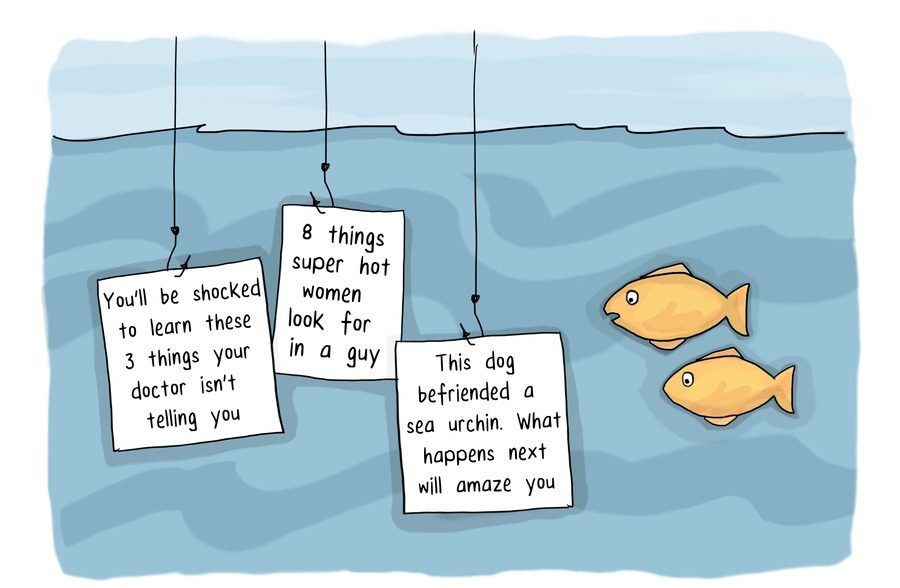
Social media platforms were not designed as public libraries where the most reliable information is placed on the most prominent shelf. Their recommendation systems respond to signals of attention and engagement. And human attention has peculiar tastes.
Research by William Brady and colleagues found that moral-emotional language was associated with greater diffusion of political messages. Steve Rathje and colleagues found that references to political opponents were particularly effective at generating engagement.
A 2025 experiment published in Science demonstrated that changing exposure to content expressing partisan animosity could affect users’ polarisation.
These studies concern particular platforms and political contexts; their findings cannot automatically be generalised to all health communication. But they illustrate how digital environments can reward certain forms of expression.
Emotion travels. Identity travels. Conflict travels. Stories travel.
Now consider the average institutional announcement: “In accordance with the recommendations of the inter-agency technical working group, relevant stakeholders are encouraged to facilitate the implementation of…”
By the time the sentence reaches its destination, half the audience has gone elsewhere and the other half is looking for the verb.
Meanwhile, someone with a smartphone has explained the same issue in thirty seconds, using a personal story and language people actually speak. Which one gets shared?
The solution is obviously not to turn international organisations into sensationalist influencers. Accuracy and nuance remain indispensable.
But accuracy is not a distribution strategy. And publishing something on Facebook is not the same as understanding how communication works on Facebook.
Perhaps we should invest less effort in simply transferring institutional messages to new channels—and more in understanding what makes information accessible, credible and useful once it gets there.
4. We have learned to listen, provided people say what we expected them to say
One positive legacy of COVID was the expansion of institutional social listening. We developed systems capable of examining enormous volumes of public conversation, detecting emerging narratives and identifying misinformation.
The WHO–UNICEF guidance on infodemic insights recognises a much broader purpose: bringing together different information sources to understand people’s questions, concerns and experiences, then translating findings into action.
An important advance. But technology has a habit of making our old assumptions considerably more efficient.
We build a sophisticated listening platform. Then we give it a list.
Misinformation. Distrust. Hesitancy. Conspiracies. Negative sentiment.
And away it goes, diligently finding the things we instructed it to find.
Sometimes social listening resembles a very sophisticated game of bingo.
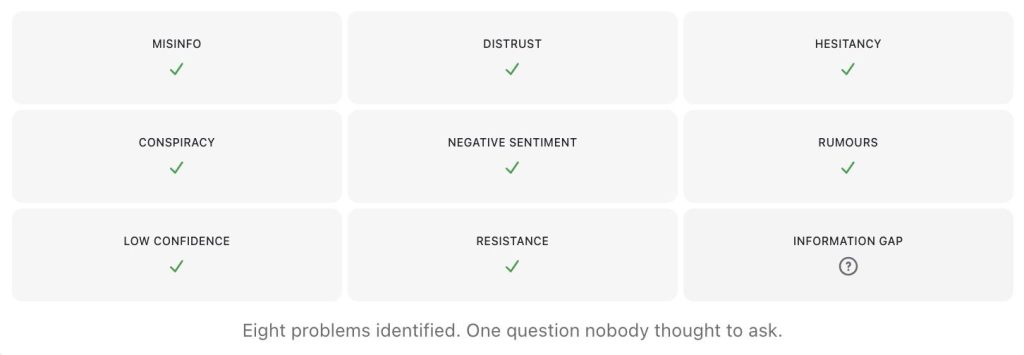
Misinformation? Tick. Distrust? Tick. Hesitancy? Tick. Conspiracy? Tick.
A magnificent dashboard appears. Everyone admires the colours. A report is produced. And next month we repeat the exercise.
Classification is useful. It allows us to track patterns, compare trends and identify risks. The trouble begins when our categories become more permanent than the reality they are supposed to describe.
If we start listening with a predefined list of what we expect to find, we are not really listening to discover. We are listening to classify.
A question labelled hesitancy might reveal confusion about access to services. A discussion categorised as distrustmight expose an institution’s failure to deliver something it promised. And sometimes people understand us perfectly well and simply disagree.
Listening should occasionally surprise the listener.
A system that examines millions of conversations without ever discovering something outside its original categories may be wonderfully consistent. But I would hesitate before calling it curious.
That was precisely our lesson in Sierra Leone. The problem wasn’t a shortage of data. It was the questions we had taught ourselves to ask of it.
Sometimes an institution needs to change its explanation. Sometimes its assumptions. And sometimes what it is doing.
5. We are defending democracy from misinformation while overlooking how democratic communication itself has changed
This is where the problem becomes larger than public health or development communication.
Democratic institutions developed much of their modern communication machinery when publishing was expensive and relatively few organisations controlled mass distribution.
Then the internet changed the terms. Everyone could publish. Communities could organise across borders. Political conversations became continuous. Algorithms began influencing which voices received attention.
And now AI is making the production, translation, personalisation and interpretation of information faster and cheaper than ever.
Yet institutional communication often retains the assumptions of the previous era.
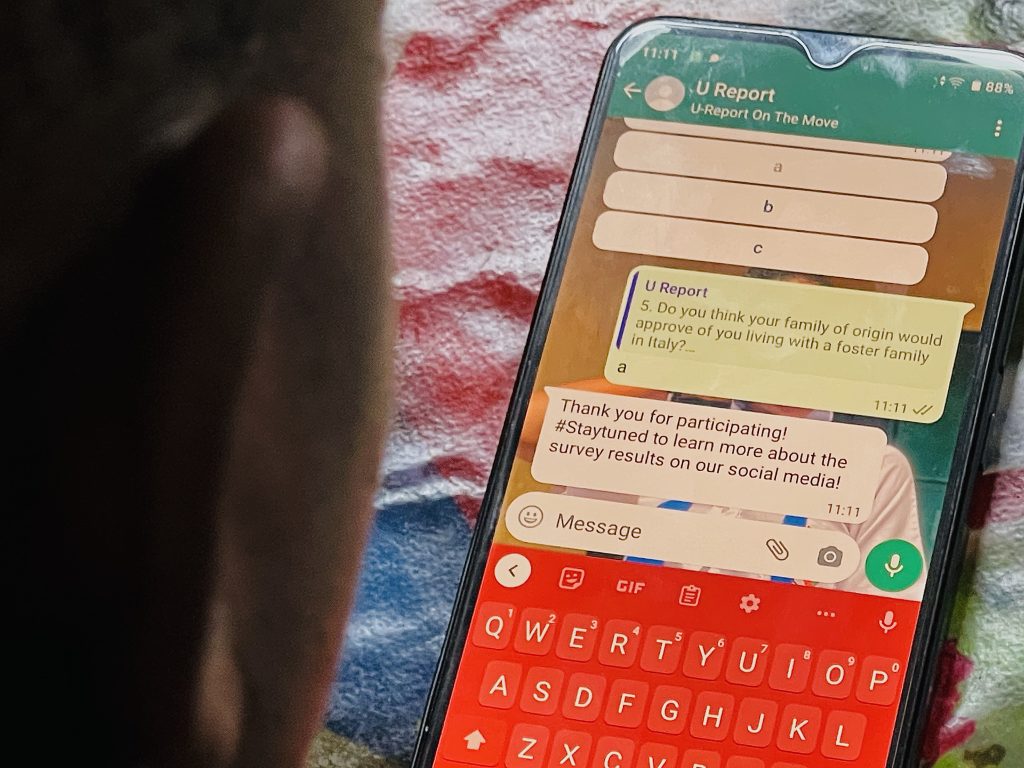
We produce knowledge. The public receives it. If the public misunderstands, we explain again.
If people disagree, we investigate their attitudes. If they circulate something inaccurate, we correct it.
But democracy requires more than citizens receiving correct information. It requires that people can question institutions, examine competing explanations, contribute their experience, challenge decisions and form independent judgments.
A population that repeats every official statement perfectly might produce excellent communication indicators. It would not necessarily constitute a particularly healthy democracy.
This is why the OECD’s Facts Not Fakes: Tackling Disinformation, Strengthening Information Integrity matters.
The objective is not to appoint institutions as arbiters of truth, but to support conditions where reliable, plural and independent information can thrive. The UN Global Principles for Information Integrity similarly emphasise trust, transparency, public empowerment and human rights.
AI makes this ambition more urgent. A machine can now produce a thousand convincing explanations before an institution has approved its first press release. It can help people understand complex issues and access knowledge previously beyond their reach. It can also manufacture persuasive nonsense on an industrial scale.
Information is becoming abundant while attention, trust and meaningful understanding remain stubbornly scarce.
And democratic participation cannot be reduced to ensuring that people encounter the information institutions want them to see. It must preserve their ability to understand, question and make choices for themselves.
So what should change?
I don’t suggest abandoning misinformation monitoring. Deliberate manipulation exists. False claims cause harm. Some actors exploit uncertainty regardless of how well institutions communicate.
But surely we can acknowledge all of that without organising our entire communication strategy around finding and correcting what people get wrong.
What we need is a continuous relationship rather than an endless succession of corrective campaigns.
Listen to understand → identify information gaps → work with trusted communities → develop useful explanations → engage → observe how information is interpreted → adapt → listen again.
Connect digital conversations with offline experiences. Measure understanding, not merely reach. Look beyond whether people did what we wanted to whether they understood why. And ensure insights can change not just communication products, but institutional decisions.
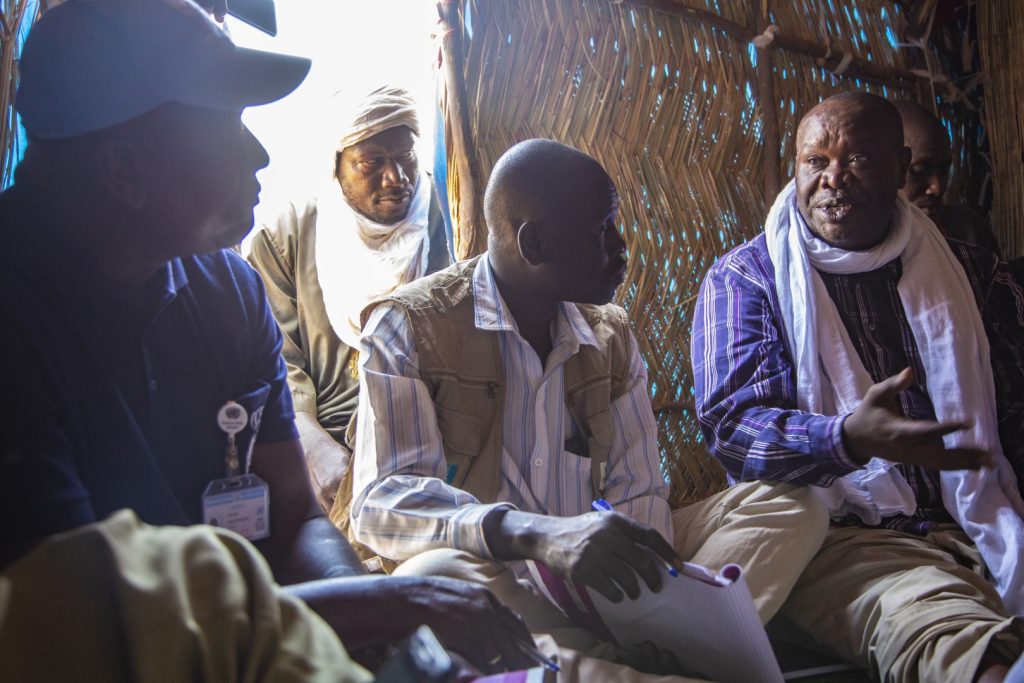
Sometimes the problem is a missing explanation. Sometimes it is an inaccessible service or a policy that needs reconsideration. And occasionally, the appropriate response to public criticism is not another campaign. It is changing what we are doing.
Our experience in Sierra Leone taught me that the data weren’t necessarily wrong. They were simply answering a smaller question than the one we ought to have been asking.
We have become remarkably good at detecting when people misunderstand us. We are less practised at asking whether we have explained ourselves badly.
Perhaps the next breakthrough in fighting misinformation will not come from a better system for identifying what people get wrong. It may come from institutions becoming better at understanding what people are trying to tell them.
Because the internet did not simply give institutions new channels for distributing old messages. It changed the architecture of communication itself.
And if we wish to remain relevant within that architecture, we may have to do something rather radical.
Listen before deciding what people are supposed to be saying.